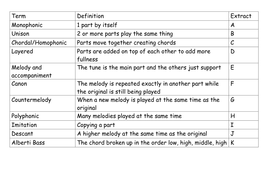
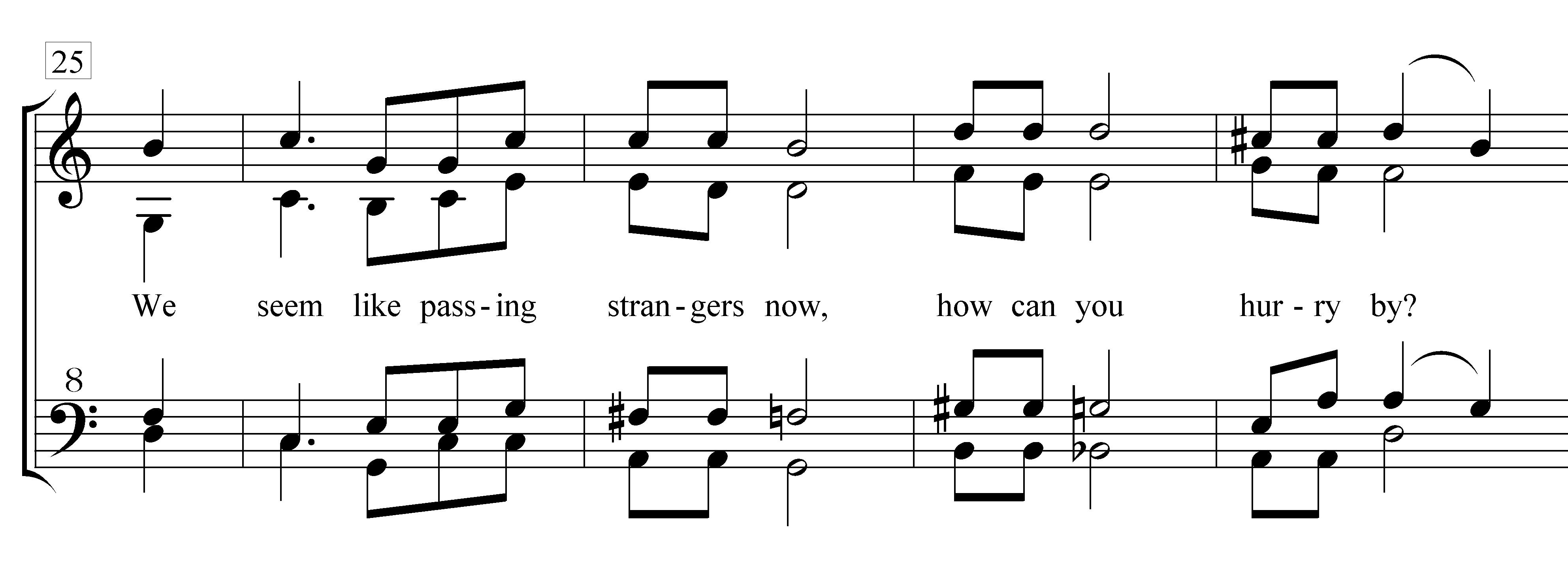
Texture Music Definition Brainly. It can have one layer or multiple layers, which will build the texture and quality of a song. Harmony is produced when two complementary notes sound at the same time. The accompaniment may be simple chords or a harmony with melodic interest, but in either case, the main melody must be clearly distinguishable. A composer will use each of these to define. Musical texture is how we describe the overall quality, or sound, of a piece of music.
Harmony is produced when two complementary notes sound at the same time. Texture describes the complexity of a musical composition. Answering questions also helps you learn! | meaning, pronunciation, translations and examples In music, monophony is the simplest of musical textures, consisting of a melody (or tune), typically sung by a single singer or played by a single instrument player (e.g., a flute player) without accompanying harmony or chords.many folk songs and traditional songs are monophonic.
AQA GCSE Music Texture and Melody Revision | Teaching Resources from d1uvxqwmcz8fl1.cloudfront.net A texture is more purely polyphonic, and thus more contrapuntal, when the musical lines are rhythmically differentiated.a subcategory of polyphony, called homophony, exists in its. A melody consisting of an unstable combination of chords c. The texture of medieval renaissance music the addition of more melodic lines to the gregorian chants created polyphonic texture, meaning it has two or more melodic lines. Simply put, rhythm is that music component that makes us move, or even just tap the foot, when we listen to a song. In the visual arts, texture is the perceived surface quality of a work of art. My music theory book best put the definition of texture as the way melodic, rhythmic, and harmonic are woven together in a composition. by this definition the texture of a piece is a combination of all the pieces that make up music, but looking at them all together instead of separately. Texture musical texture is the layering of a musical piece; The meaning of harmony in music.
Musical texture refers to the number and type of layers used in a composition and how these layers are related. The word texture is used because adding different layers or elements to music creates a musical tapestry.. Harmony is produced when two complementary notes sound at the same time. In music, texture is basically a way to describe how the music or sound is organized. Characteristic feature that distinguishes the character or feel of the music d. What is the basic element of music? Musical texture is how we describe the overall quality, or sound, of a piece of music. In music, texture refers to the combined layers of sound and the relative function of those layers in a piece of music. Homophonic texture (homophony) is the most common texture in western music, both classical and popular. A melody is also considered to be monophonic if a group of singers (e.g., a choir) sings the same melody together. Texture might be described as high or low, depending on the pitch;. | meaning, pronunciation, translations and examples C to f) and fifth (ex.
The texture of something is the way that it feels when you touch it, for example how. Simply put, rhythm is that music component that makes us move, or even just tap the foot, when we listen to a song. Texture can be simple or elaborate, and is described with the following terms: This made the melodies more complex and elaborate A composer will use each of these to define.
Basics of Music by Joseph Runs Through from cdn.thinglink.me In music, texture is how the melodic, rhythmic, and harmonic materials are combined in a composition, thus determining the overall quality of the sound in a piece. Simply put, rhythm is that music component that makes us move, or even just tap the foot, when we listen to a song. In music,texture is how the melodic, rhythmic, and harmonic materials are combined in a composition, thus determining the overall quality of the sound in a piece. In the visual arts, texture is the perceived surface quality of a work of art. Answering questions also helps you learn! Homophonic texture (homophony) is the most common texture in western music, both classical and popular. The meaning of harmony in music. People often use words such as thick, dense or thin to describe the musical texture.
By definition, rhythm is the pattern of regular or irregular pulses caused in music by the occurrence of strong and weak melodic and harmonic beats.
Harmony is produced when two complementary notes sound at the same time. Information and translations of texture (music) in the most comprehensive dictionary definitions resource on the web. Texture describes the complexity of a musical composition. It is defined as having one voice, a melody, which stands out from background accompaniment. By definition, rhythm is the pattern of regular or irregular pulses caused in music by the occurrence of strong and weak melodic and harmonic beats. The texture of something is the way that it feels when you touch it, for example how. Texture is the physical feel of something — smooth, rough, fuzzy, slimy, and lots of textures something in between. In music, monophony is the simplest of musical textures, consisting of a melody (or tune), typically sung by a single singer or played by a single instrument player (e.g., a flute player) without accompanying harmony or chords.many folk songs and traditional songs are monophonic. | meaning, pronunciation, translations and examples The word texture is used because adding different layers or elements to music creates a musical tapestry.. Musical texture refers to the number and type of layers used in a composition and how these layers are related. Which of these refers to a musical texture? If there are only a few instruments playing, like a duet for example, then the music can be described as thin or sparse.
Texture musical texture is the layering of a musical piece; In western music, polyphony typically includes a contrapuntal separation of melody and bass. Texture is one of the basic elements of music. In music, texture refers to the combined layers of sound and the relative function of those layers in a piece of music. My music theory book best put the definition of texture as the way melodic, rhythmic, and harmonic are woven together in a composition. by this definition the texture of a piece is a combination of all the pieces that make up music, but looking at them all together instead of separately.
How to Spell Chords | Helping You Harmonise from www.helpingyouharmonise.com In the visual arts, texture is the perceived surface quality of a work of art. Information and translations of texture (music) in the most comprehensive dictionary definitions resource on the web. Help the community by sharing what you know. Since it is achieved when notes are played at the same time, harmony is described as being vertical. When you describe the texture of a piece of music, you are describing the relationship of melodic and (sometimes) harmonic elements with each other. It can have one layer or multiple layers, which will build the texture and quality of a song. Simply put, rhythm is that music component that makes us move, or even just tap the foot, when we listen to a song. Texture might be described as high or low, depending on the pitch;.
Simply put, rhythm is that music component that makes us move, or even just tap the foot, when we listen to a song.
Definition of texture (music) in the definitions.net dictionary. We can conceive of musical texture as the density or thickness of a musical piece, showing the range between the lowest and highest pitches. The brainly community is constantly buzzing with the excitement of endless collaboration, proving that learning is more fun — and more effective — when we put our heads together. This musical texture refers to the use of two or more melodic lines, which are distinct from each other. In music, the texture is how the tempo, melodic, and harmonic materials are combined in a musical composition, determining the overall quality of the sound in a piece. During the renaissance, the church had less power over musical activity. In western music, polyphony typically includes a contrapuntal separation of melody and bass. Polyphony began when singers started improvising with parallel melodies, with emphasis on fourth (ex. The texture of something is the way that it feels when you touch it, for example how. Use oftexture, along with other elements of design, can convey a variety of messages and emotions. My music theory book best put the definition of texture as the way melodic, rhythmic, and harmonic are woven together in a composition. by this definition the texture of a piece is a combination of all the pieces that make up music, but looking at them all together instead of separately. In polyphonic music, two or more simultaneous melodic lines are perceived as independent even though they are related. Simply put, rhythm is that music component that makes us move, or even just tap the foot, when we listen to a song.